

 EN
EN  ID
ID 
Description
Puasa Penuh Rasa: Plant-Based Lokal Ramadan Challenge is a digital initiative by Meatless Monday Indonesia held annually during the month of Ramadan, utilizing user-generated content (UGC) to highlight the richness of Indonesia’s local plant-based foods. Through this challenge, people from various regions across Indonesia are invited to share stories, recipes, and experiences in preparing plant-based dishes for sahur and iftar meals.
As part of the Meatless Monday Indonesia movement, this initiative not only encourages culinary exploration, but also introduces the simple practice of “not eating meat one day a week” as a small step toward healthier and more sustainable eating habits.
The challenge creates a participatory space where ideas, creativity, and cooking practices can be shared, while also encouraging audiences to move beyond simply knowing about plant-based eating toward actually trying it themselves.
Overview
Ramadan is closely associated with self-reflection, togetherness, and more mindful consumption choices as part of spiritual practice. In the Indonesian context, many traditional Ramadan dishes are naturally plant-based, such as kolak, sayur lodeh, pecel, and various simple dishes made from local ingredients.
Through this challenge, participants shared a wide range of traditional plant-based dishes from different regions of Indonesia. This demonstrates that plant-based eating is actually not a new concept, but rather something deeply rooted in Indonesian culture and traditions for generations.
These eating patterns reflect local wisdom in utilizing naturally available, simple, and sustainable food ingredients.
At the same time, social media provides a major opportunity to revive this culinary heritage through content that is personal, visual, and easily accessible. The challenge acts as a bridge between local traditions and digital culture, while reinforcing the idea that plant-based lifestyles are part of Indonesia’s culinary heritage.
Objective
This challenge aims to encourage public participation in promoting and celebrating Indonesia’s local plant-based foods during Ramadan.
Through this initiative, the campaign seeks to increase awareness of the diversity of local plant-based foods from Sabang to Merauke, while also encouraging healthier, more mindful, and more sustainable consumption practices.
More broadly, the challenge is designed to encourage a shift from knowledge to action—inviting people not only to understand the benefits of plant-based eating, but also to begin trying and incorporating it into their daily lives.
This approach aligns with the principle of Meatless Monday Indonesia: encouraging realistic small steps, such as gradually reducing meat consumption.
In addition, the challenge generates a bank of UGC content that can serve as inspiration and a reference for future campaigns.
Process
The challenge took place throughout Ramadan (approximately 30 days), inviting participants to create and share videos featuring Indonesian local plant-based recipes on Instagram and TikTok.
The resulting content showcased cooking processes, ingredients used, and stories behind each dish, including its regional origins and personal significance.
Through this approach, participants became not only audiences, but also creators actively shaping narratives around local food and more sustainable eating practices.
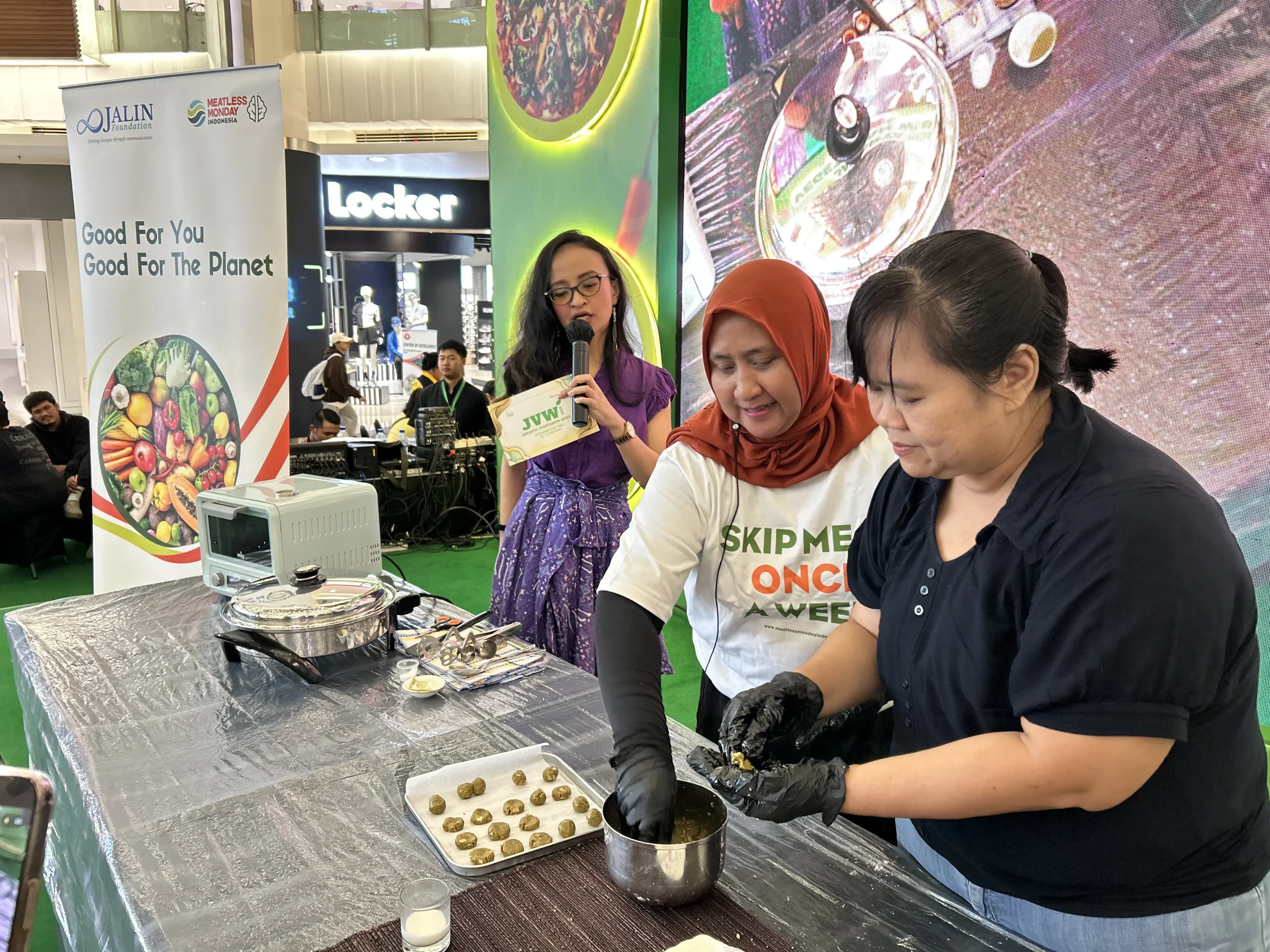
The process enabled experiential learning (learning by doing), allowing participants and audiences to directly see, try, and recreate the dishes being shared.
With a simple and relatable format, the content helped reduce barriers to trying plant-based eating, making it easier for audiences to move from simply watching to actually taking action.
Outcome
The challenge generated active participation through 38 pieces of user-generated content that helped strengthen the visibility of local plant-based foods in digital spaces.
More than just numbers, these contents demonstrated that innovation can emerge from everyday kitchens and can easily be replicated by wider communities.
Several examples below represent some of the many contents produced during the challenge:
In addition, the challenge successfully reaffirmed that plant-based lifestyles are not a new trend, but rather part of Indonesia’s culinary heritage that has been practiced for generations.
The variety of traditional dishes shared throughout the challenge strengthened the narrative that Indonesian communities have long been familiar with and engaged in plant-based eating practices.
At the same time, the challenge encouraged a shift from awareness to action, where audiences were not only exposed to information, but also provided with real examples that could be immediately applied in daily life.
The collection of content produced now serves as an inspiration bank that can continue to encourage more sustainable consumption practices.
Looking ahead, Puasa Penuh Rasa is expected to grow beyond a seasonal activity and evolve into part of a broader movement. By encouraging consistent small changes—from knowing, to trying, to building habits—communities can develop greater appreciation for local food while also contributing to healthier lifestyles and environmental sustainability through their everyday food choices.