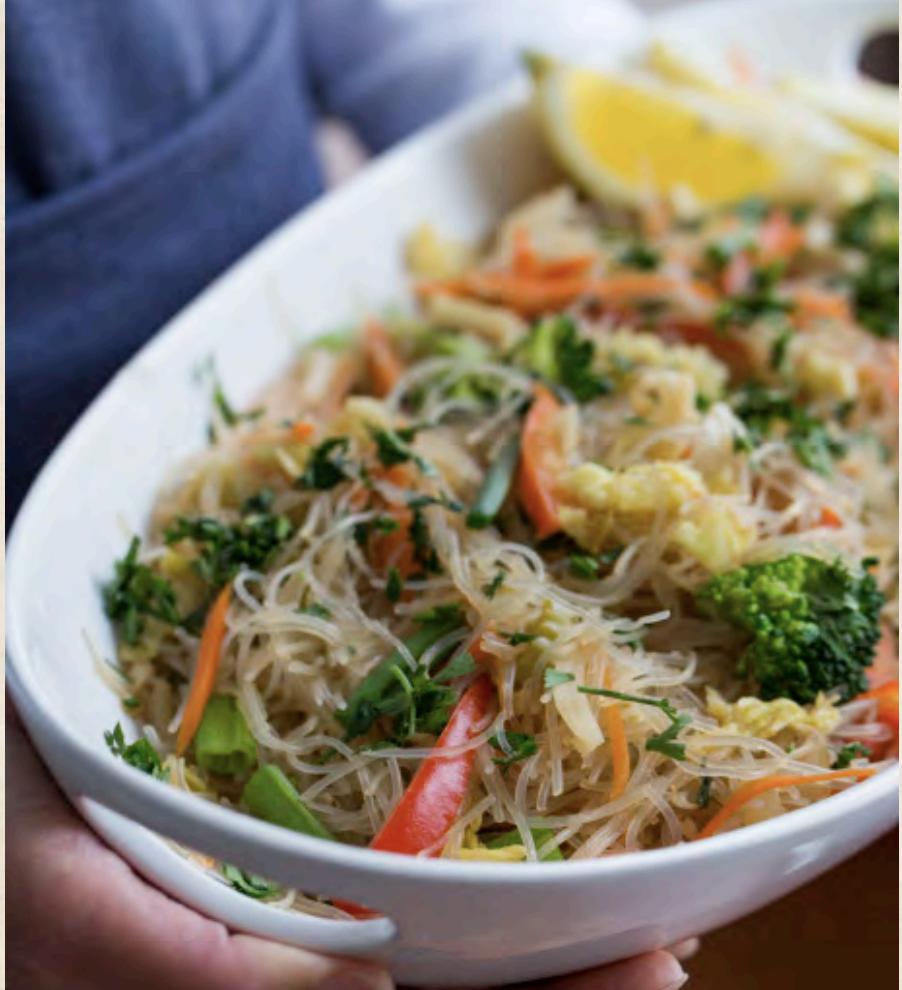
Stir-Fried Cellophane Noodles is a delightful Asian noodle dish featuring translucent glass noodles stir-fried with aromatic seasonings, vegetables, and savory ingredients. Known for their delicate texture and ability to absorb rich flavors, cellophane noodles create a satisfying dish that is both comforting and versatile.
The secret to its delicious taste lies in the balanced combination of fragrant spices, savory sauces, and fresh ingredients that coat every strand of noodle. Whether served as a quick meal or a side dish, Stir-Fried Cellophane Noodles offers a flavorful experience with a perfect blend of texture and umami.
4 cangkir (940 ml) kaldu sayuran rendah natrium
1 kemasan (250 g) soun (mi pati kacang)
2 sendok makan minyak sayur
2 sendok makan bawang putih cincang
1 cangkir (150 g) bawang bombay kuning, iris
2 cangkir (200 g) brokoli, potong-potong (ukuran potongan disesuaikan agar seragam dengan sayuran lain)
4 cangkir (250 g) kubis, iris halus
2 sendok teh garam laut halus, dibagi menjadi dua bagian
2 buah wortel besar beserta bagian hijaunya (daun wortel); kupas dan iris wortel memanjang seperti batang korek api (pisahkan daunnya dan sisihkan)
1 buah paprika merah besar, iris
2 batang seledri, cincang
½ sendok teh lada hitam bubuk segar
1 sendok teh gula pasir
3 batang daun bawang, potong sepanjang 2,5 cm
¼ cangkir (60 ml) kecap asin
3 sendok makan air perasan lemon segar, ditambah irisan lemon untuk penyajian
Washed, chopped carrot tops for garnishChili sauce such as sambal oelek
Simple steps to create delicious meals from scratch.
Didihkan kaldu sayuran dengan api besar di dalam panci ukuran sedang.
Remove from the stove and add the cellophane noodles in batches, allowing the noodles to soften before adding more to the saucepan. Let the noodles soak until they are soft and the stock has been absorbed, about 20 minutes.
Swirl the oil into a large wok or skillet and set over high heat until shimmering hot.
Fry the garlic and onions until aromatic and the onions turn translucent, about 1 minute.
Add the broccoli, followed by the cabbage and 1 teaspoon of the salt. Next, add the carrots, then the red pepper, then the celery, stirring for about 30 seconds between each addition.
Add the remaining 1 teaspoon salt, black pepper, and sugar. Keep stirring and cooking until the vegetables are cooked to your liking, 3 to 4 minutes more.
Urai soun agar tidak menggumpal, lalu masukkan ke dalam wajan bersama daun bawang. Aduk rata, kemudian tambahkan kecap dan air perasan lemon, lalu aduk hingga bumbu melumuri mi secara merata. Cicipi dan sesuaikan bumbu jika perlu.
Setelah mi panas merata, pindahkan ke piring saji besar.
Garnish with the reserved green carrot tops; serve with lemon wedges and chili sauce in small dishes on the side.
Soak the cellophane noodles until just tender. Over-soaking can make them too soft and cause them to break during stir-frying.
Use high heat and keep the ingredients moving to preserve the vegetables' crisp texture and create a light smoky flavor.
Toss in the soy sauce and seasonings after combining the noodles with the vegetables to ensure even coating without making the noodles soggy.
Origins & Heritage
Bihun Goreng may appear to be a simple stir-fried noodle dish, but its roots reflect centuries of cultural exchange across the Indonesian archipelago. Introduced by Chinese immigrants, bihun—delicate rice vermicelli known as cellophane noodles—was embraced by local communities and reimagined with Indonesian spices, sweet soy sauce, and regional seasonings. Over time, it evolved into a beloved staple served everywhere from bustling street food stalls to family dining tables.
Beyond its everyday appeal, Bihun Goreng carries a deeper cultural meaning. In Chinese tradition, long noodles symbolize longevity, prosperity, and good fortune, making them a common feature during birthdays, Lunar New Year, and festive gatherings. Indonesia adopted this symbolism while infusing the dish with its own culinary identity, creating a comforting meal that represents both shared heritage and local creativity. Every plate tells the story of how diverse traditions can blend into something uniquely Indonesian.