


 EN
EN  ID
ID 
Sundanese cuisine is always marked by simplicity, freshness, and authentic flavors, or what is often called nyunda. In the fertile land of Pasundan (West Java), plant-based ingredients in the form of vegetables are transformed into unforgettable dishes. Among the many side dishes that accompany rice in Sundanese cuisine, ulukutek oncom has become a true comfort food for the community.
This dish, which originates from the Priangan region (Bandung, Garut, and Tasikmalaya) in West Java, is basically a perfectly sautéed oncom dish. Although its appearance is simple, this food reflects the philosophy of Sundanese life: making the most of natural resources, embracing simplicity, yet still offering complex nutritional value and a distinctive taste.
So, how did this delicious plant-based dish come to exist in West Java?
Getting to Know Ulukutek Oncom
Since long ago, food in West Java has been born from the creativity of the Sundanese people.
In Sundanese culture, there is the term motekar, which describes the ability to keep innovating and making use of whatever is available nearby. From this spirit emerged dishes such as ulukutek oncom, one of the traditional foods closely tied to the daily life of Sundanese people.
According to the Indonesian dictionary (KBBI), ulukutek is a vegetable-based dish that usually uses oncom. Oncom itself is made from fermented tofu pulp (soybean residue) with the help of fungi such as Neurospora sitophila. This means the dish was created from the ingenuity of the Sundanese people in transforming simple ingredients into food that remains both nutritious and enjoyable (Rahayu & Putra, 2025).
Because of this, ulukutek oncom is often seen as part of the Sundanese philosophy of life, which upholds simplicity and local wisdom. Transforming tofu residue—initially considered waste—into a high-value food symbolizes that even something simple can become useful when processed with thought and effort. This is interpretatively aligned with the Sundanese proverb:
Mun teu ngope moal nyapek, mun teu ngakal moal ngakeul, mun teu ngarah moal ngarih.
This teaches that everything must be worked on, explored, and thoughtfully considered in order to bring benefits to life.
Thus, ulukutek oncom, especially the process of making oncom itself, serves as a real example of how Sundanese society wisely processes leftover food ingredients. Oncom can even be seen as a symbol of a local zero-waste practice that has existed for generations.
Cooking Ulukutek Oncom
Ulukutek oncom is a very affordable dish because all of its ingredients are easy to find. Although simple, its deliciousness comes precisely from the blend of spices and the patient cooking process.
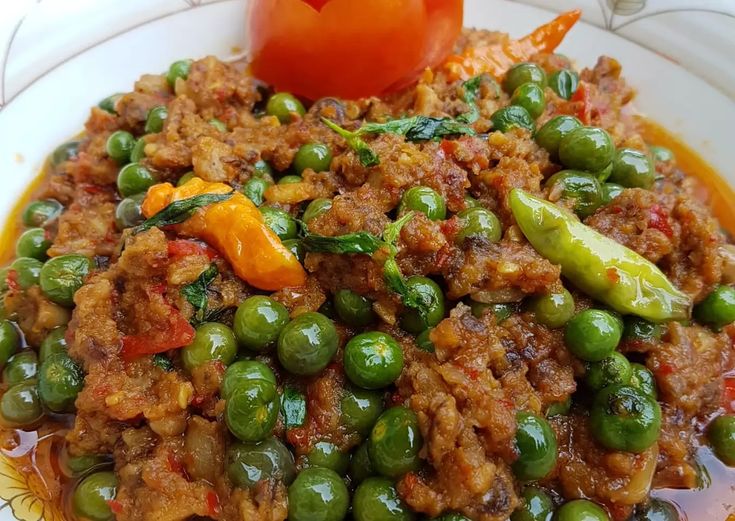
Source: Resep Ulukutek Leunca Oncom oleh Seruni Puspa Indah
Referring to a recipe from Cookpad.com, the main ingredients used are:
- leunca (black nightshade berries)
- oncom
- basil leaves
The ground spice paste consists of:
- shallots
- garlic
- bird’s eye chilies
- red curly chilies
(as most Sundanese people love spicy flavors) There is one spice that makes ulukutek oncom different from other stir-fries, namely kencur (aromatic ginger / lesser galangal).
In addition, roasted candlenuts are added as a natural flavor enhancer.
Supporting seasonings such as salt and palm sugar or granulated sugar help enrich the taste.
The cooking method is also simple:
- Wash all ingredients except the oncom.
- Grind all the spices into a paste.
- Mash the oncom using a mortar and pestle, fork, or another tool until it reaches the desired texture.
- Heat oil in a pan, then sauté the spice paste until fragrant.
- Add the oncom, stir well, and season with salt and sugar. Taste to adjust the flavor.
- Add the leunca and a little water, then cook until the berries are done.
- Finally, add the basil leaves and sliced scallions.
This dish is best enjoyed with warm rice.
Ulukutek Oncom and Its Nutritional Benefits
Oncom is the star ingredient in ulukutek oncom. Although it is made from tofu residue, the fermentation process actually makes oncom rich in nutrients. According to information from Alodokter and Halodoc, oncom contains a fairly high amount of protein. This protein helps maintain bone and muscle strength and supports body tissue repair.
Oncom also contains iron, which plays an important role in preventing anemia and supporting healthy blood circulation, making it good for heart health and stamina. In addition, it contains phosphorus, which supports bone health, helps brain function, and maintains hormonal balance.
Because it goes through a fermentation process, oncom also contains probiotics, which are beneficial for digestive health, boost immunity, and help prevent digestive tract problems. The presence of leunca in this dish further enhances its nutritional value, especially through its antioxidants and vitamin C content.
With its diverse nutritional content and the long story behind its preparation, ulukutek oncom is perfect for anyone who wants to enjoy plant-based food that remains deeply rooted in local wisdom.
So, have you ever tried ulukutek oncom? Come on, make it one of your Meatless Monday menus!
Reference
Alodokter.com. 2024. Oncom, Makanan Fermentasi dengan Segudang Manfaat. https://www.alodokter.com/oncom-makanan-fermentasi-dengan-segudang-manfaat
Alodokter.com. 2024. Leunca, Ini kandungan nutrisi dan manfaatnya untuk kesehatan. https://www.alodokter.com/leunca-ini-kandungan-nutrisi-dan-manfaatnya-untuk-kesehatan
Cookpad.com. Ulukutek Oncom Leunca. https://cookpad.com/id/resep/13958896
Halodoc.com. 2025. Murah dan Bergizi, ini 5 Manfaat Oncom bagi Kesehatan. https://www.halodoc.com/artikel/murah-dan-bergizi-ini-5-manfaat-oncom-bagi-kesehatan
Rahayu, F,P & Putra, R.D. 2025. The Meaning of the Name of Traditional Sundanese Food. Vol. 1 (2) : 330-339.